
Lifestyle & Entertaining
When the People You Love Are the People You Used to Drink With
Sometimes nobody is pressuring you to drink. The people you love are simply woven into an old routine. Here's how to make the next dinner feel different.

There are people in your life you drink with.
Or drank with.
Not drinking buddies. I mean actual people you love.
Your parents. Your sister. Your oldest friends. Another couple you've had dinner with a hundred times.
The people who come over, put something on the kitchen counter, open a bottle of wine and start talking while you're still trying to finish dinner.
Nobody announces that we're drinking now. Nobody pressures anyone. Nobody even thinks about it.
It's just what you've always done together.
And then you stop drinking.
Tuesday night at home gets easier. Wednesday gets easier. You cook dinner without wine. You watch television. You go to bed.
You start thinking: okay. Maybe I've actually got this.
Then someone you've had wine with approximately four hundred times walks through the door.
They don't pressure you. They don't ask whether you're drinking. They barely get their coat off.
And somehow your brain goes: Oh. We're having wine tonight.
I think this might be one of the strangest parts of changing your relationship with alcohol.
Sometimes you aren't only changing what you drink. You're changing something you've done with specific people for years.
The People Can Be Part of the Routine
I used to think of drinking habits mostly as things connected to places or times.
Wine while cooking. Drinks on Friday. Beer during football. Something on vacation.
But people can become part of a routine too.
You see someone you haven't seen in a while and immediately think of the restaurant you always go to. Someone visits and you know exactly what you'll cook. Your parents come over and you open the wine they like. Your friends arrive and somebody starts making drinks.
None of this has to be unhealthy or dramatic. It's repetition. And repetition gets really good at making itself feel automatic.
Sometimes the person isn't pressuring you to drink. They're simply part of the memory of drinking.
That's Different From Peer Pressure
There's plenty of advice about what to say when someone asks why you aren't drinking or tells you to just have one.
But what if nobody does?
What if your friend opens a bottle of wine because that's what your friend always does? What if everybody is being completely normal and respectful, and you still suddenly want one?
That's not necessarily a boundary problem. It might simply be an old association waking up.
Decide What You're Drinking Before the Doorbell Rings
Don't wait until everyone arrives to decide what you're drinking.
Because now you're answering the door. Someone brought bread. Someone brought dessert. The dog is losing his mind because people are here. Dinner needs another twenty minutes.
Everyone ends up in the kitchen. Somebody says: Should I open this?
So make the decision earlier. Put your drink in the refrigerator. Make the pitcher. Cut the garnish. Put the glass out.
I want my first drink decision made before anybody walks through the door.
You Don't Have to Make Everyone Else's Drinking Your Project
If you're comfortable having alcohol around, your decision not to drink doesn't automatically mean everyone coming to your house has to make the same decision.
Someone can bring wine. Someone can have a beer. You don't need to spend the evening monitoring anybody else's glass.
This isn't: Welcome to my house. Tonight we'll be exploring my relationship with Chardonnay.
Nobody asked for that dinner party.
The goal is much smaller: what do I want to drink tonight?
Change One Part of the Old Sequence
Think about what usually happens when these particular guests arrive.
Maybe it's door opens, hugs, everybody goes directly to the kitchen, bottle comes out, wine gets poured, everyone stands around the island while dinner finishes.
That's a sequence.
So change one part. Have appetizers outside. Sit on the porch first. Take the dog around the block together. Have everyone's first drinks already waiting.
Same people. Different sequence.

Give Everybody Something Good to Drink
Alcohol-free doesn't need its own sad little corner.
If I'm thinking about the food, music, table and what everybody else might want to drink, I can put a little thought into what I want too.
Not because it has to replace wine perfectly. I increasingly don't want it to. I just want something that belongs at dinner.
The Nova Pour: Zero
This week's Pour: Zero is made for exactly that moment: something worth having ready before the doorbell rings.
Golden Hour
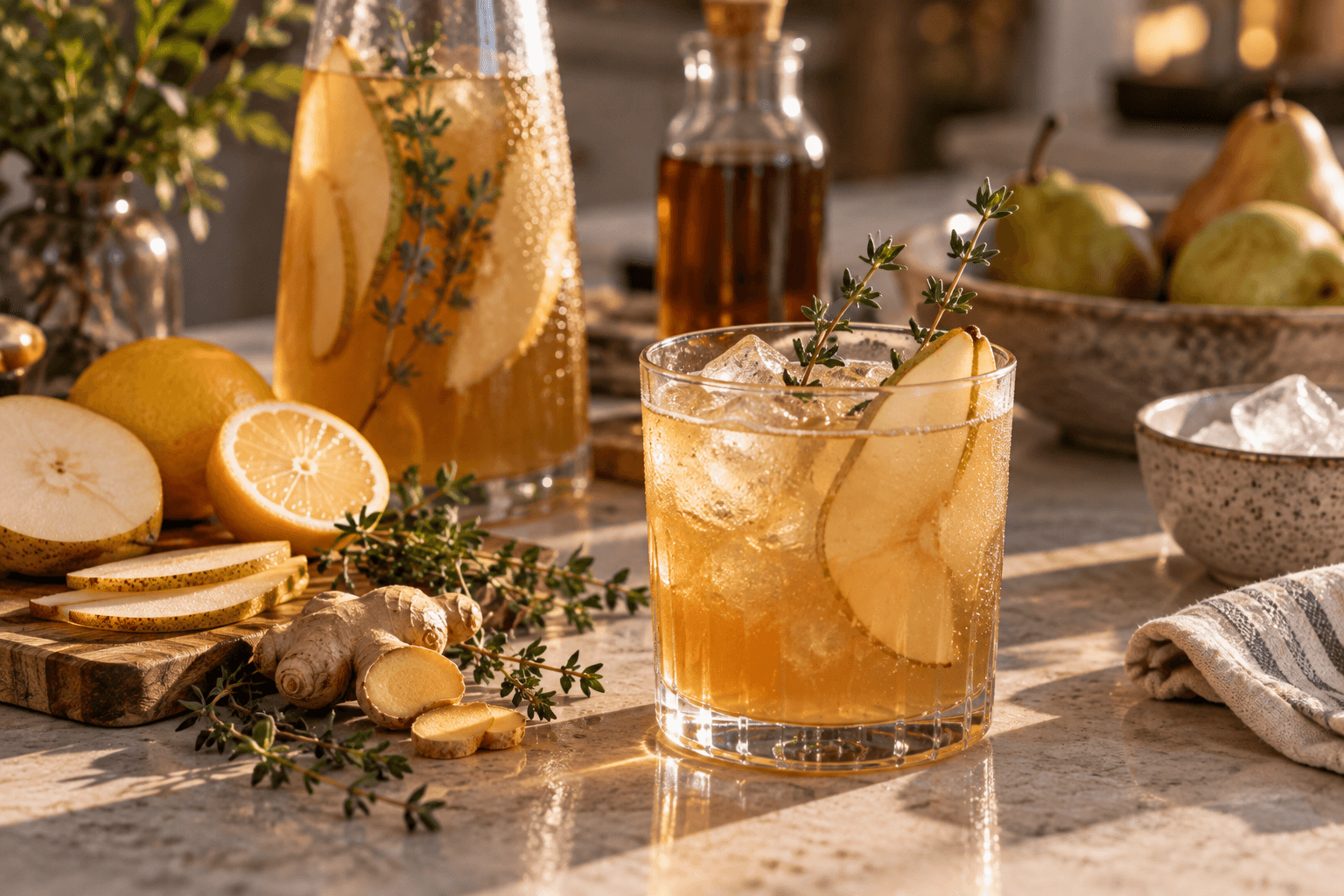
A Pear, Ginger, Lemon & Black Tea Pour
I wanted something for early fall dinners that didn't taste like apple cider, didn't have rosemary sticking out of it, and wasn't trying to impersonate wine.
Pear makes it soft. Fresh lemon keeps it bright. Ginger gives it bite. Black tea adds tannin and structure. Thyme gives it an herbal finish that belongs beside dinner.
It isn't a mocktail version of anything. It's just really good.
What You'll Need
- 2 ounces pear nectar
- 2 ounces strong chilled black tea
- ¾ ounce fresh lemon juice
- 2 ounces ginger beer
- 1 ounce chilled sparkling water
- Plenty of ice
- 1 thin pear slice
- 1 small sprig of fresh thyme
How to Make It
Brew the black tea a little stronger than you normally would and let it chill completely.
Fill a rocks glass or substantial tumbler with ice.
Add the pear nectar, chilled black tea and fresh lemon. Give it a stir.
Top with ginger beer and sparkling water.
Taste it. Too sweet? More lemon. Too sharp? A little more pear. Too gingery? More sparkling water.
Finish with a thin slice of pear and a small thyme sprig.
No zero-proof spirit. No complicated syrup. Just pear, tea, ginger, lemon and bubbles.
Make the First Round Before Anyone Arrives
If I'm having several people over, I would make the base ahead: pear nectar, tea and lemon.
Keep it cold in a pitcher. Don't add the ginger beer or sparkling water yet or you'll lose the bubbles.
When people arrive, pour the base over ice and top each glass individually.
Put the wine out too if you're serving it. Put beer in the refrigerator. Whatever works for your house.
The point isn't to hide alcohol behind a locked door. The point is that when somebody asks what you're drinking, you already have an answer.
This.
Plan for the Second Drink Too
The first drink can be easy. You're prepared. People arrive. You make your Golden Hour.
Then dinner happens. An hour passes. Someone reaches for the wine bottle and refills their glass.
And suddenly you realize: I only planned for the first twenty minutes.
Maybe you make another Golden Hour. Maybe sparkling water sounds better with dinner. Maybe you switch to iced tea. Maybe everyone has coffee afterward.
It doesn't need to be a schedule. You just don't want everybody else's refill to be the first time you've considered yours.
Don't only plan what you'll drink when people arrive. Think about what you'll want when everybody stays.
Don't Watch Everyone Else's Glass
If you're not drinking and everyone else is, suddenly you can become weirdly aware of alcohol.
Who poured another glass. How much is left in the bottle. Whether someone is opening a second one. Whether everybody else seems more relaxed than you.
That's a miserable way to spend dinner.
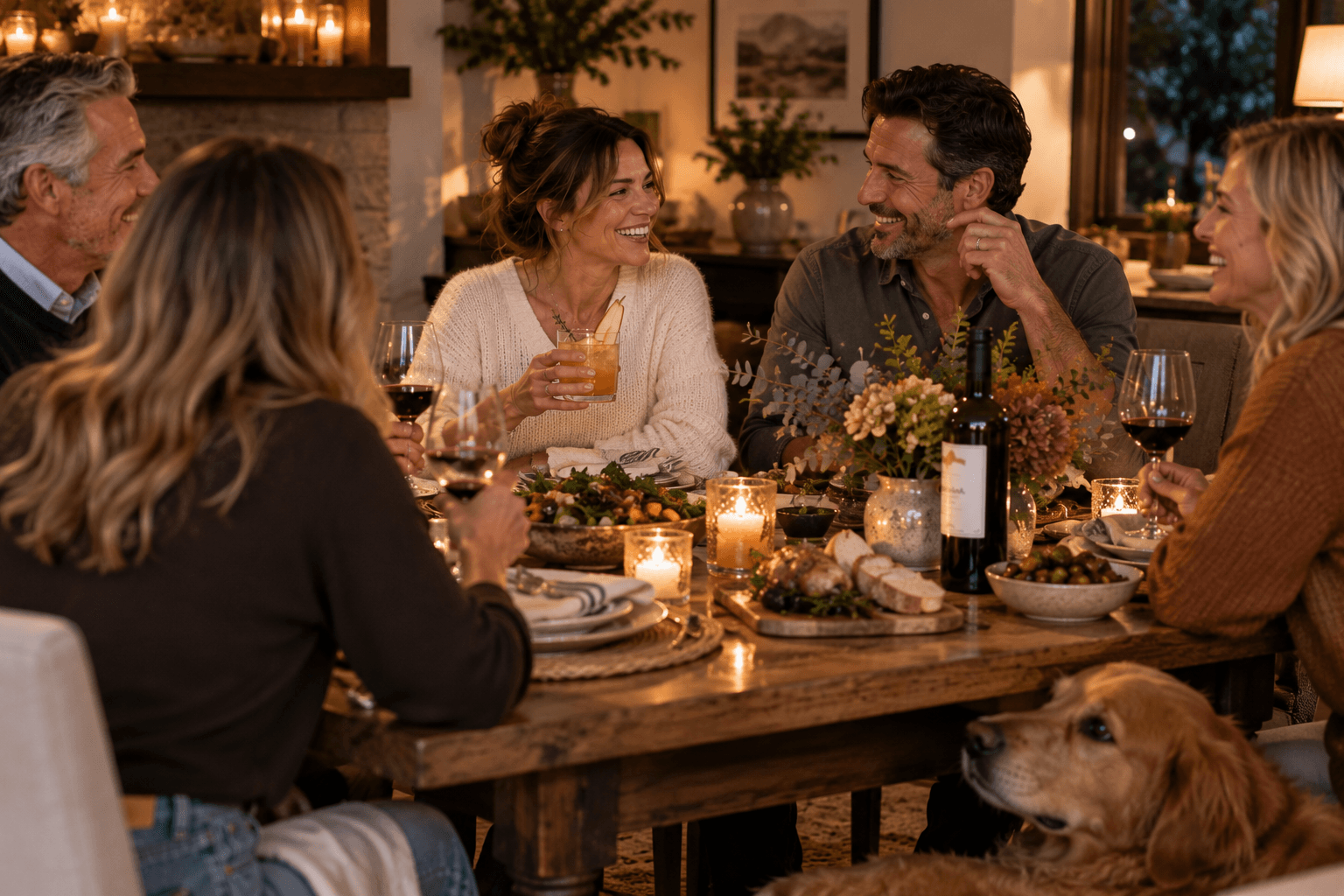
Eat. Talk. Clear plates. Laugh. Go outside. Bring dessert out. Play with the dog. Be at dinner.
The entire evening doesn't need to become an observation exercise about who is drinking what.
If It Feels Harder Than You Expected, That Tells You Something
Maybe you don't drink. Great.
Maybe you spend half the night thinking about wine. That's useful information.
Maybe you planned not to drink and then you did. That's information too.
The useful response isn't necessarily: I blew it.
Try: okay. What happened?
Who were you with? What part of the evening changed? Was it when the bottle opened? When everyone sat down? When somebody offered? The refill? Was it harder with these people than it is during your normal routine?
That's a pattern. And patterns are useful because you can do something with them.
A night that didn't go the way you planned can still teach you something about the next one.
You Might Need a Few New Memories With the Same People
You don't necessarily need different friends. You don't necessarily need to stop inviting people you love over.
Sometimes what you need is another version of the evening.
The first dinner without wine. Then another. The first holiday. The first weekend visit. The first restaurant.
Eventually your brain has more than one story attached to these people.
Not: when we're together, we drink.
Just: when we're together, we're together.
The People Don't Have to Change for the Pattern to Change
Some people can make not drinking feel harder.
Not because they're doing anything wrong. Not because they're trying to derail you. Not because you need to cut them out of your life.
They're simply woven into a version of your life where drinking happened.
So make your drink before they arrive. Change one piece of the routine. Plan for the refill. Pay attention to what feels harder.
And if the night doesn't go exactly the way you planned, learn something from it instead of turning it into a verdict about yourself.
Then invite them over again when you're ready.
Same kitchen. Same dinner. Same people you love.
Same people. Same love. Different glass.
Maybe that's enough for tonight.
Continue reading
Sometimes the ritual around a drink matters more than the alcohol itself. Danielle wrote about what she discovered when she changed her familiar 5 o'clock cooking routine.
Frequently Asked Questions
Why is it harder not to drink around certain people?
People, places and routines can become associated with drinking through repetition. Someone does not have to pressure you for an old social pattern to feel familiar again. Noticing which people or situations make drinking feel more automatic can help you plan differently next time.
What can I do before hosting people I normally drink with?
Decide what you want to drink before guests arrive and have it ready. You can also change one part of the usual routine, such as starting outside, serving appetizers somewhere other than the kitchen or having first drinks prepared before anyone reaches for a bottle.
Do I need to ask guests not to bring alcohol?
Not necessarily. That depends on what makes the situation manageable for you. Some people are comfortable serving alcohol while choosing not to drink, while others find having alcohol in the house makes things significantly harder. You are allowed to set the environment that works for you.
What should I drink when everyone else is having wine?
Choose something you genuinely enjoy rather than treating it as a consolation drink. Danielle's Golden Hour combines pear nectar, chilled black tea, lemon, ginger beer, sparkling water and thyme for an alcohol-free drink designed to belong at dinner without imitating wine.
What if I planned not to drink but had alcohol anyway?
One drinking occasion does not have to become a verdict about your entire effort. Look at what happened, including who you were with, when the decision changed and what made the situation harder than expected. That information can help you plan for a similar situation in the future.
How do I make the Golden Hour alcohol-free drink?
Combine 2 ounces pear nectar, 2 ounces strong chilled black tea and ¾ ounce fresh lemon juice over ice. Top with 2 ounces ginger beer and 1 ounce sparkling water, stir gently, then garnish with a thin pear slice and fresh thyme.