Sobriety & Wellness
Why Do I Wake Up at 3 A.M. After Drinking?
You had a few drinks, fell asleep almost immediately, then woke up completely alert at 3 a.m. Here's what alcohol may be doing to the rest of your night.

You had a few drinks.
You got into bed.
And you fell asleep almost immediately.
So far, alcohol appears to be doing exactly what people have been saying it does forever.
It relaxed you.
It made you sleepy.
It helped you fall asleep.
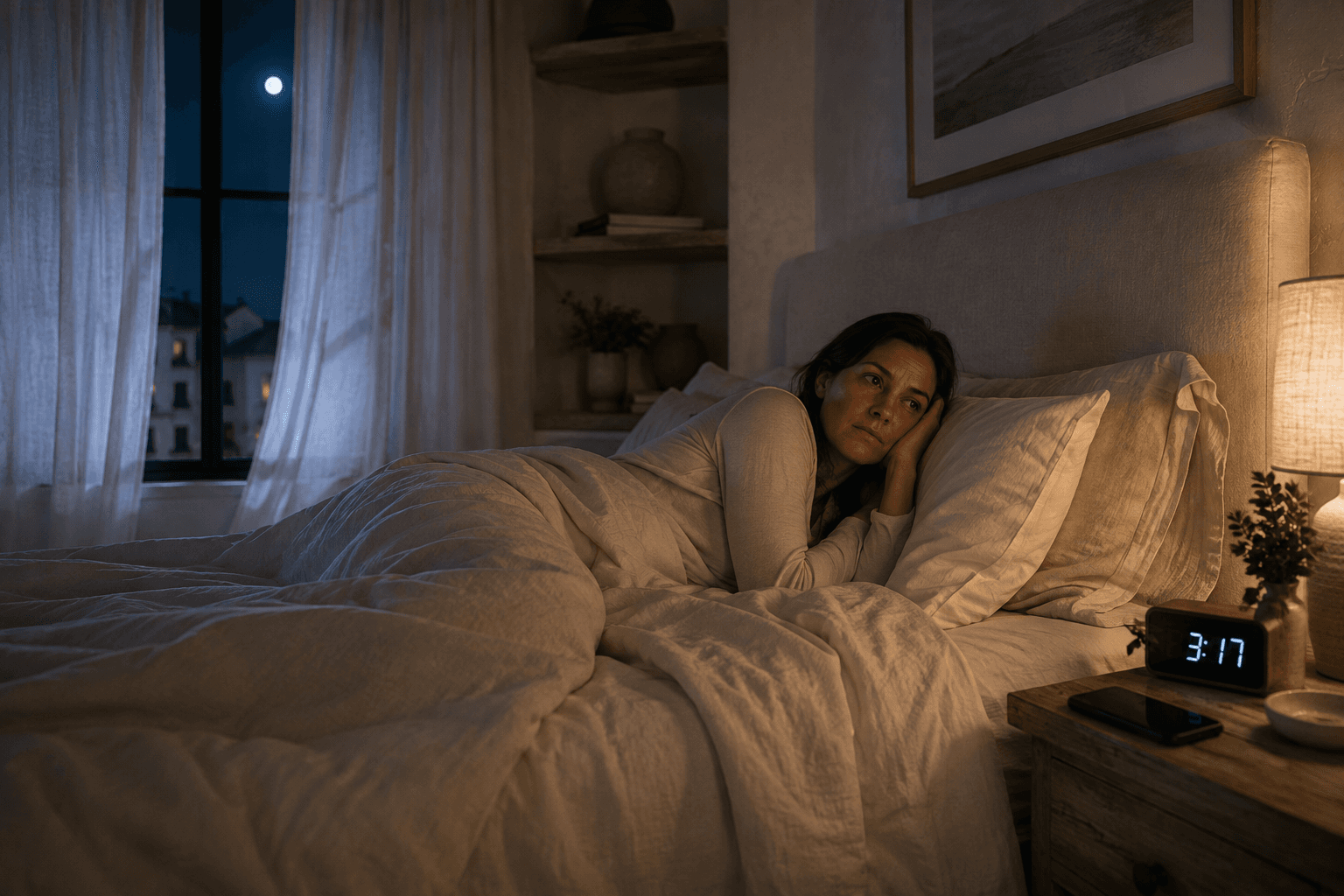
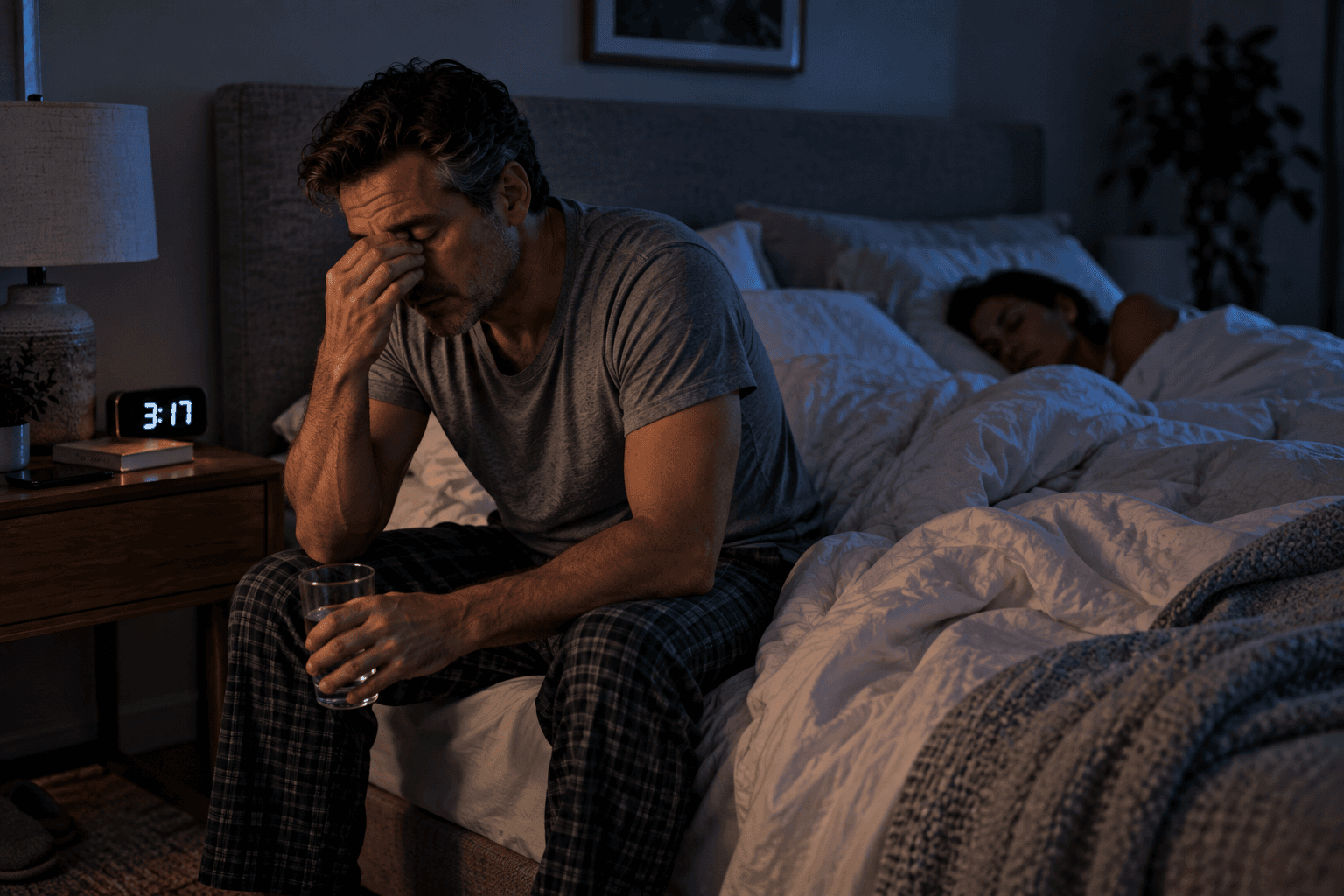
Then it's 3:17 a.m.
You're awake.
Not slightly awake.
Awake awake.
The room is too warm. Your mouth is dry. Maybe you need the bathroom.
You roll over.
Check the clock.
Make the mistake of calculating how many hours remain before your alarm.
And now you're wondering:
If alcohol helped me fall asleep so easily, why can't I stay asleep?
That question gets at one of the most misleading things about alcohol and sleep.
Alcohol can make the beginning of the night feel easier while making the rest of the night worse.
Researchers Didn't Just Ask People How They Slept
Sleep research has an annoying problem.
We're asleep while it's happening.
Ask someone whether they slept well and they'll tell you what they remember.
Maybe they remember falling asleep instantly.
Maybe they don't remember waking several times.
Maybe they spent eight hours in bed and assume they slept for eight hours.
That's why a new study published in Drug and Alcohol Review is interesting.
Researchers studied 500 adults between ages 25 and 65 and looked at alcohol use alongside both self-reported sleep and objective sleep measurements using actigraphy.
Actigraphy uses a wearable device to estimate patterns of sleep and wakefulness across the night.
The researchers found poorer objective sleep among people in the high-risk alcohol-consumption group.
They had more awakenings.
More fragmented sleep.
More time awake after initially falling asleep.
And lower sleep efficiency.
That's a useful distinction.
Because the problem with alcohol and sleep isn't always: I couldn't fall asleep.
Sometimes it's: I fell asleep beautifully. I just didn't stay asleep beautifully.
Falling Asleep Is Only the First Part of the Night
This is where alcohol earns its reputation as a sleep aid.
Alcohol has sedating effects.
Drink enough in the evening and you may genuinely feel drowsier.
You may fall asleep faster.
That's not imaginary.
The mistake is assuming: I fell asleep quickly equals I slept well.
Those aren't interchangeable.
Sleep is an active biological process that changes throughout the night.
Your brain moves through different stages.
Those stages repeat in cycles.
And alcohol can change the architecture of those cycles, including REM sleep.
So when someone says wine helps them sleep, the most accurate response may be:
It might help you fall asleep.
That's a different claim.
The First Half of the Night Can Fool You
Imagine judging an entire movie by the opening twenty minutes.
That's roughly what happens when we judge sleep entirely by how quickly we passed out.
Early in the night, alcohol's sedating effects may dominate the experience.
You feel relaxed.
Your eyes get heavy.
You fall asleep.
Success.
Except your body isn't finished with the alcohol just because you're unconscious.
It's still processing it.
And the night keeps going.
As the effects of alcohol change across the night, sleep can become more fragmented.
That can mean more transitions toward wakefulness, more interruptions and more moments when your brain gets close enough to awake that sometimes you actually remember them.
Why Does It Always Feel Like 3 A.M.?
It isn't literally always 3 a.m.
There is no universal alcohol alarm clock hiding in your brain.
The timing depends on when you drank, how much you drank, when you went to bed, your metabolism and plenty of individual factors.
But the middle or later part of the night is when many people notice the contradiction.
The sedating part of the evening has passed.
You're no longer at the beginning of sleep.
And the night may be increasingly fragmented.
So you wake up.
Then another problem appears.
You notice that you're awake.
Now the clock matters. Tomorrow matters. The alarm matters.
And suddenly an ordinary nighttime awakening becomes: Oh no. I need to get back to sleep.
Alcohol Can Give You More Than One Reason to Wake Up
Sleep architecture isn't the only thing happening.
An evening of drinking can create several ordinary reasons for the night to become more interrupted.
You May Need the Bathroom
Alcohol can increase urine production, particularly during and after drinking.
That's not ideal when the goal is eight uninterrupted hours in bed.
You May Feel Thirsty
Alcohol can contribute to dehydration, especially when drinking replaces other fluids or combines with other factors that increase fluid loss.
Dry mouth at 3 a.m. is not exactly a sleep aid.
You May Feel Too Warm
Alcohol can affect thermoregulation and blood vessels. Some people notice feeling warm, flushed or sweaty during the night after drinking.
Snoring and Breathing Can Become Worse
Alcohol can relax muscles in the upper airway and may worsen snoring and sleep-disordered breathing in susceptible people.
Breathing disruptions can repeatedly disturb sleep even when you don't remember each awakening.
Your Stomach May Have Opinions
Reflux, nausea or general digestive discomfort can also turn a quiet night into a much less quiet one.
None of these explanations requires some mysterious 3 a.m. phenomenon.
Sometimes your body simply has several reasons to wake up at once.
You Might Be Waking Up More Than You Remember
This is one reason the actigraphy finding is so interesting.
We tend to think of nighttime awakenings as events we remember.
I woke up at 2:40.
Then again at 4:15.
But sleep fragmentation doesn't necessarily mean lying consciously awake for an hour every time.
Sleep can be interrupted by shorter periods of wakefulness or movement.
You may not remember all of them the next morning.
Your sleep still experienced them.
I don't remember being awake all night. So why do I feel like I barely slept?
Eight Hours in Bed Isn't Necessarily Eight Hours of Good Sleep
Let's say you go to bed at 11.
Alarm goes off at 7.
Eight hours.
Looks perfect on paper.
But imagine that night contains multiple awakenings, more time awake after initially falling asleep and greater fragmentation.
You still spent eight hours in the bedroom.
That doesn't mean your brain experienced eight hours of consolidated sleep.
Researchers use a measurement called sleep efficiency to help describe this.
In simple terms, it compares how much of your time in bed was actually spent asleep.
In the new study, sleep efficiency was poorer among the high-risk alcohol-consumption group.
That's why I slept eight hours and why do I feel exhausted can exist in the same morning.
Then Morning Arrives
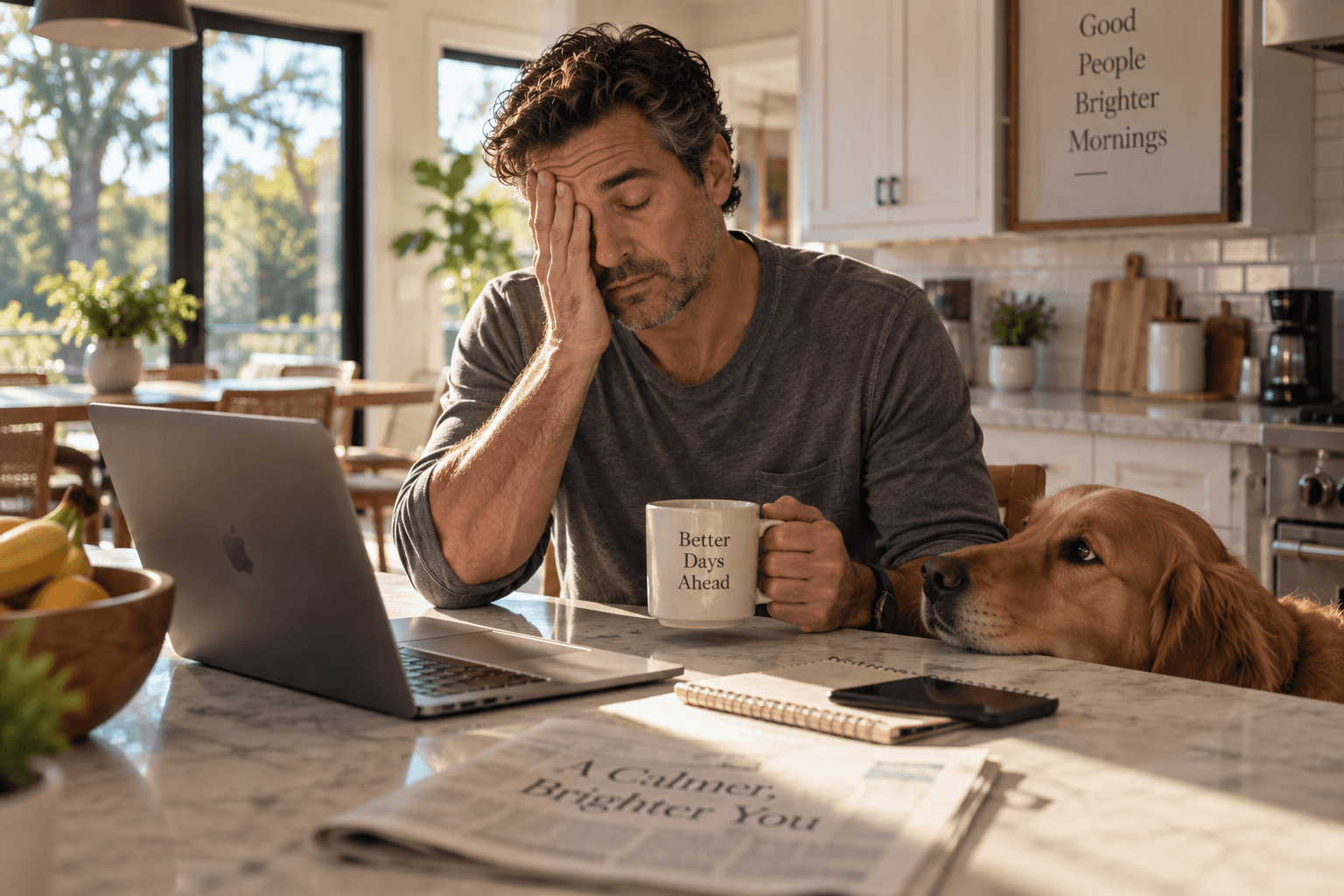
This may be the least dramatic consequence of drinking and one of the easiest to underestimate.
You're not necessarily hungover.
Your head doesn't hurt.
You're not nauseated.
You remember everything.
You're just tired.
Coffee becomes less optional.
Getting moving takes longer.
Your workout suddenly sounds negotiable.
Your patience isn't quite as impressive.
The morning feels heavier than it should.
And because none of that qualifies as a spectacular hangover, it can be easy not to connect it to alcohol.
You might simply think: I didn't sleep very well.
Which is true.
The more interesting question is why.
This Is Why Alcohol Helps Me Sleep Is Such a Convincing Belief
Because part of it can feel true.
If you usually lie in bed thinking for forty minutes and two glasses of wine make you fall asleep in ten, that's noticeable.
You experience the benefit immediately.
The cost arrives later.
Possibly while you're asleep.
Possibly during awakenings you barely remember.
Possibly the next morning.
That's an unfair competition.
The perceived benefit happens tonight. The consequence may not become obvious until tomorrow.
So alcohol can keep winning the argument: See? You fell asleep.
While morning quietly presents the rest of the evidence.
What About Just One or Two Drinks?
This is where the answer gets less satisfying.
There isn't a universal number where alcohol suddenly begins affecting sleep.
Effects vary with dose, timing, sex, body size, drinking pattern, medications, health conditions and individual physiology.
Previous research has found changes in sleep architecture even at relatively low alcohol doses.
Generally, greater alcohol exposure tends to produce greater disruption.
But this isn't a useful equation:
Two drinks equals exactly 47 minutes of bad sleep.
Human sleep doesn't work that neatly.
The practical takeaway is simpler.
If you repeatedly notice drink, fall asleep easily, wake during the night, then feel tired in the morning, that's a pattern worth paying attention to.
You don't need a laboratory to notice your own Tuesday mornings.
Try the Most Boring Experiment Possible
You don't need to buy a sleep tracker.
You don't need to optimize seventeen biomarkers.
You don't need to become the person who explains their REM percentage at breakfast.
Just compare nights.
If you normally drink several evenings each week, notice a few basic things.
- What time did you go to bed?
- How quickly did you fall asleep?
- Did you wake during the night?
- Did you struggle to fall back asleep?
- How did you feel when you woke up?
Then notice the same things on a night when you don't drink.
Not once.
A few times.
Your own experience isn't a randomized controlled trial.
But you're not trying to publish it.
You're trying to answer:
What happens to my sleep when I drink?
That answer can be surprisingly useful.
And What Happens to Sleep When You Stop?
This is where today's story meets a different one.
Removing alcohol doesn't guarantee perfect sleep immediately.
For some people, particularly after heavier or prolonged drinking, sleep can temporarily become strange after stopping.
Insomnia.
Restlessness.
Vivid dreams.
Different sleep patterns.
That's a separate question from what we're talking about here, and an important one.
Continue reading
What happens after you remove alcohol is a different sleep story. Lyra's earlier guide explains why sleep can temporarily get strange after quitting and why one difficult alcohol-free night doesn't mean drinking was giving you better sleep.
Today's question comes one step earlier.
What was alcohol doing to the night in the first place?
Researchers Are Starting to Ask the Question in Reverse
There's another interesting direction emerging in alcohol-and-sleep research.
For years, the obvious question has been: how does drinking affect sleep?
Researchers are increasingly asking whether improving sleep might also matter when someone is trying to change their drinking.
We need to be careful here.
The evidence isn't strong enough to say that fixing insomnia will make someone stop drinking.
Insomnia and problematic alcohol use often coexist, however, and sleep is increasingly being treated as something worth addressing rather than an unrelated side issue.
Research on cognitive behavioral therapy for insomnia, commonly called CBT-I, has shown meaningful improvements in insomnia among people across the spectrum of alcohol use disorder.
Alcohol-related outcomes have been less consistent, so CBT-I shouldn't be presented as a treatment for drinking itself.
The interesting idea isn't that better sleep cures drinking. It's that sleep may deserve to be treated as part of the picture.
Maybe Morning Is the Better Measure
We tend to evaluate drinking while we're drinking.
Did I have fun?
Did I relax?
Did dinner taste good?
Did I fall asleep easily?
Those aren't unreasonable questions.
But they're incomplete.
Maybe the experiment needs one more data point.
How did the next morning feel?
Not: did I have a catastrophic hangover?
Just: did I sleep?
Did I wake up repeatedly?
Did I feel restored?
Did I need three coffees to become conversational?
Would I choose the exact same night again knowing how the morning felt?
That's not an argument that nobody should drink.
It's simply a longer measurement window.
If you're deciding whether a drink helped you sleep, don't stop measuring when you fall asleep. Measure the morning too.
Because sometimes the answer to why did I wake up at 3 a.m. started several hours earlier.
Frequently Asked Questions
Why do I wake up at 3 a.m. after drinking alcohol?
Alcohol can make falling asleep easier while disrupting sleep later in the night. Research has associated higher-risk alcohol consumption with more awakenings, greater sleep fragmentation, more time awake after initially falling asleep and lower sleep efficiency. The exact time you wake varies with when and how much you drank, metabolism and other individual factors.
Why can I fall asleep easily after drinking but not stay asleep?
Alcohol has sedating effects, so it can make you feel drowsy and may shorten the time it takes to fall asleep. That does not mean the rest of the night will be equally restful. Alcohol can alter normal sleep architecture and is associated with more fragmented sleep later in the night.
Can alcohol make you wake up multiple times during the night?
Yes. Alcohol use has been associated with more nighttime awakenings and fragmented sleep. Drinking may also contribute to other reasons for waking, including increased urination, thirst, feeling warm, reflux, snoring or worsened sleep-disordered breathing in susceptible people.
Why am I tired after drinking even if I slept for eight hours?
Time in bed is not the same as consolidated, restorative sleep. A night containing repeated awakenings, more wake time after initially falling asleep and lower sleep efficiency can leave you tired even when eight hours passed between bedtime and your alarm.
Does one or two drinks affect sleep?
Alcohol's effects on sleep vary considerably between people and depend on dose, timing, physiology, medications, health conditions and other factors. Research has found changes in sleep architecture even at relatively low alcohol doses, while greater exposure generally produces greater disruption.
Will my sleep improve if I stop drinking?
Many people eventually experience better sleep after reducing or stopping alcohol, but improvement is not always immediate. People who have been drinking heavily or have alcohol use disorder can experience insomnia and other sleep changes during withdrawal and recovery. Persistent or severe sleep problems should be discussed with a healthcare professional.